
Judge Mental
Legendary? If only! This story is true, but it shouldn't be.

⬆︎⬆︎ Recorded LIVE on the This Is Hell radio show/podcast, and visit the website for long form interviews, Rotten History, hangover cures, and more.

You’ve heard of Judge Judy. You’ve heard of Judge Roy Bean, or you might have. You’ve heard of Judge Jury and Executioner. You’ve heard of Judge Dredd. Get ready for Judge Mental.
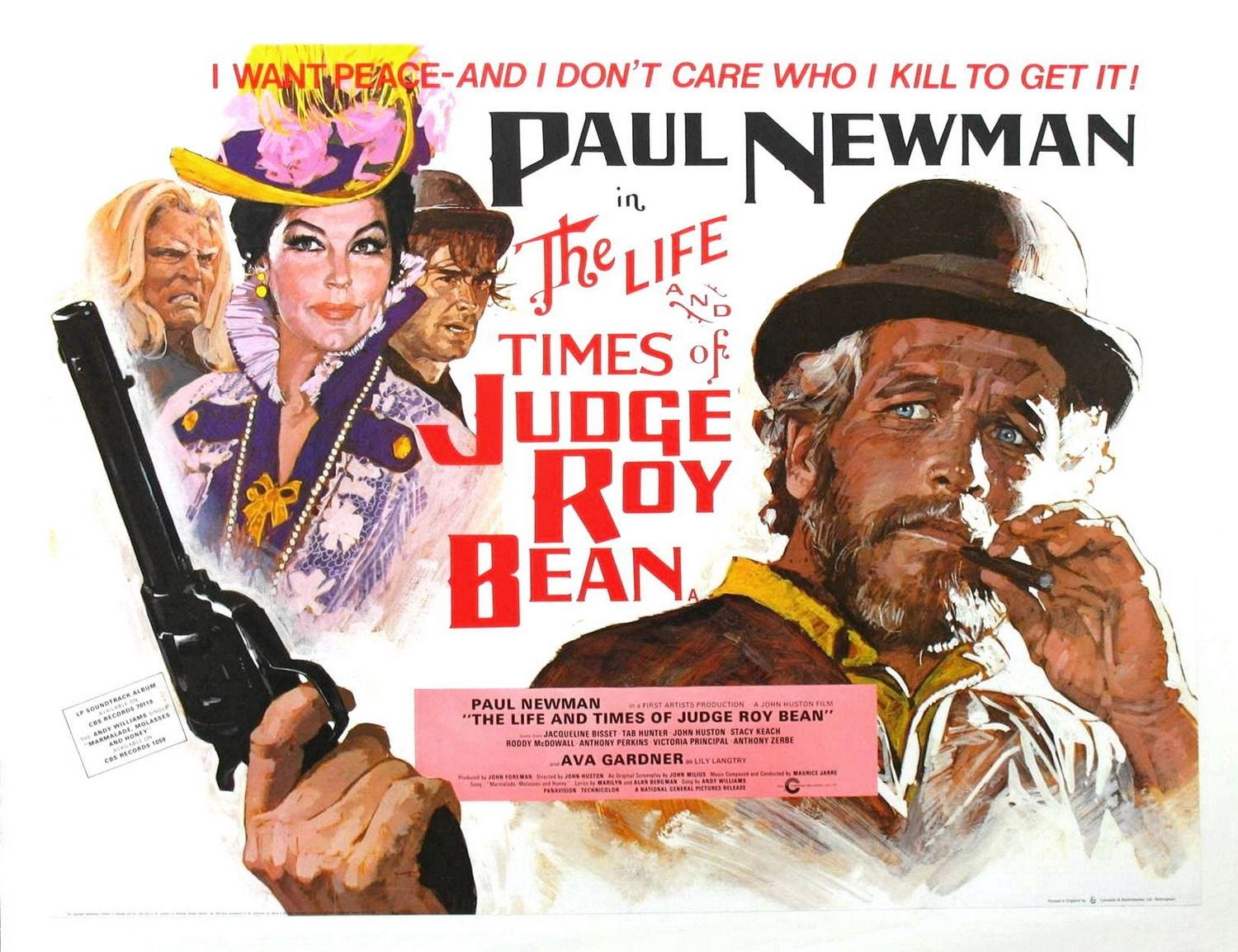
Judge Mental was a normal human judge in the court of 15th and 16th century Spain. But then he was bitten by a radioactive pineapple. Pineapple is the only fruit that lives forever, like a jellyfish. That is a mental fact. It’s a fact that only exists in Judge Mental’s bean. Although it doesn’t exist in the material world, like Judge Roy Bean once did, it does in the judge’s mental one.
So Judge Mental is still with us. Still making his totally mental judgments. Here’s one regarding a report from the Bureau of Labor Statistics that the last quarter of last year was the worst since 1947 for labor’s share of the U.S.’s economic output, despite corporate profits hitting a record $1.87 trillion in 2024. Judge Mental says, “That’s the way the cookie crumbles. Workers should have become financial gamblers instead of working. But they also should keep working.”
“The art of killing at a distance became a European specialty very early on,” wrote Sven Lindquist in his book, Exterminate All the Brutes! “The arms race between coastal states of Europe in the seventeenth century created fleets that were capable of achieving strategic goals far away from the home country. Their cannons could shatter hitherto impregnable fortresses and were even more effective against defenseless villages… Three hundred years later, those gods had conquered a third of the world. Ultimately, their realm rested on the power of their ships’ guns.”
Judge Mental says, “Yeah, that was pretty cool.”
Lindquist continues, “Too many Europeans interpreted military superiority as intellectual and even biological superiority.”
Judge Mental responds, “How many is too many? And what if they were right? Huh? What about that?”
“Genocide began to be regarded as the inevitable byproduct of progress,” Lindquist further laments.
To which Judge Mental retorts, “Why are you lamenting, Lindquist? Is it not so? Show me a progress that didn’t have genocide as its byproduct, and I’ll show you a progress unworthy of the name. How can one suggest a thing isn’t an inevitable byproduct of progress when no progress without it as a byproduct can be found?”
Judge Mental sighs a patronizing, pitying sigh. “Don’t you all understand by now? No matter whom you work for, you’ve ultimately been working for those collecting dividends in the finance casino who at their most strenuous move their money from one ‘concern’ or ‘instrument’ to another, jockeying to collect the highest payouts. Value which, if based on anything real at all, is based on underpaying labor. Labor is part of overhead. The less an entity pays for overhead, the more gemlike that entity appears to shareholders. With Trump’s tariffs raising costs of other forms of overhead, such as materials and fuel, the only place to cut costs is... your pay, relative to overall prices across the economy. The prosperity of the finance sector parasitically drains the value of labor. Thus, there is less and less you can afford, even as your power to influence policy shrinks under the shadow of those commanding enormous wealth.
“So, genocide is an inevitable byproduct of progress, or it might as well be. There will always be those in power who believe their race or whatever identity, and their cultural pedagogy, to be superior, and that this gives them special rights to dominate and command others and to commandeer the commons.
“On the other side, there are always those who must fight against them for equality, universality, inclusivity, the right to exist, the right to a livable share of the commons. These are the two sides. This is the fight: the Nazi/fascists – or as I call them, the Realists – vs the conscientious universalists, or Dreamers. It’s possible but not easy to transform from one to the other. Still, since extermination of one side or the other is the avowedly pursued solution, the opportunity for conversion is not trivial, but certainly contingent upon small miracles.”
Judge Mental wags his finger. “Reality is what we have now. And looking back from the present, we can see it was inevitable. Anything else is fantasy.”
And Judge Mental goes back to his work for the overweening killers of dreams.
But what he doesn’t know is that dreams can’t be killed. That the would-be dream killers have a much shoddier fantasy of their own. Their fantasy is to kill the dream of a better, fairer, more compassionate civilization. And the fantasy of killing dreams is just as absurd as, if not more so than, the dream itself. There is a reason the dream can’t be killed. Sure, the dream wasn’t bitten by a radioactive pineapple, yet it is immortal nevertheless.
The dream lives on because all around it is a non-human world that, while brutal at times, is never needlessly so, and never so brutal that beauty and kindness cease to be. The dream arises out of the balance of things, which is the world’s marrow. The dream is the circulating blood of the universe.
And what does Judge Mental have to say about that? Nothing. He has exhausted himself contriving his legal arguments. He has fallen asleep at his desk. And so we see a facet of reality for which the Judge and his so-called Realists have failed to account: even the judge must at some point lay down his mental armor, rest his weary bean, enter the circulatory system of the cosmos, joining, whether he likes it or not, the flow of it all, joining us as we go merrily, merrily, merrily, merrily, gently down the dream.